Nikunj Patel
at
Nikunj Patel
at

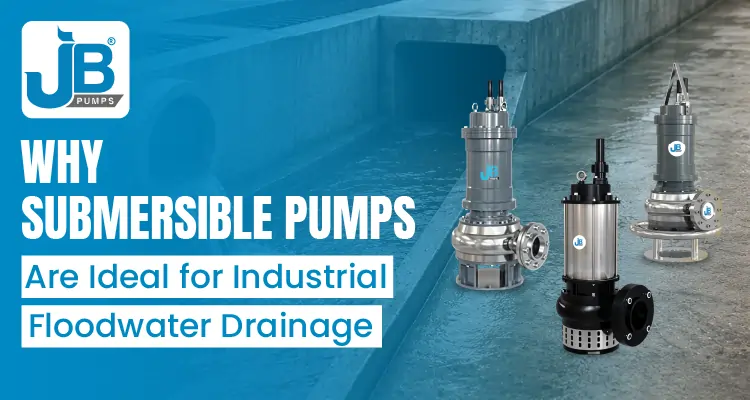
Submersible pumps are the top choice for industrial floodwater drainage because they operate fully underwater, handle high volumes of debris-filled water, and restart automatically without manual intervention. For plant managers and site engineers facing sudden waterlogging, that combination of speed, durability, and hands-off operation is what separates a controlled response from costly downtime.
At JB Pumps, we build submersible pumps engineered specifically for the punishing conditions that come with industrial flooding: silt, debris, corrosive runoff, and round-the-clock operation. This guide breaks down exactly why submersible technology outperforms other drainage methods, and how to choose the right unit for your facility.
Key Takeaways
- Submersible pumps work underwater by design, so they do not lose prime or suffer cavitation the way surface pumps often do during floodwater removal.
- They handle solids and debris, moving silt, gravel, and sludge-laden water without clogging, unlike standard centrifugal pumps.
- Sealed motor housings prevent water ingress, allowing continuous operation even when fully submerged for extended periods.
- High flow rates reduce drainage time, which limits structural damage, equipment corrosion, and production downtime.
- Corrosion-resistant construction (typically cast iron, stainless steel, or hard-metal alloys) extends service life in chemically contaminated floodwater.
- Portability and rental availability make submersible pumps practical for emergency response as well as planned dewatering.
- Lower noise and no priming requirement make them safer and faster to deploy than trailer-mounted diesel alternatives in confined industrial zones.
- Automatic float switch controls allow unattended operation, which matters most during flash flood events when staff availability is limited.
What Makes Submersible Pumps Different From Surface Pumps?
Submersible pumps are fully sealed units designed to sit inside the water they are removing, while surface pumps sit outside the water and draw fluid through a suction hose. This single design difference changes almost everything about performance during a flood event.
Surface pumps rely on suction lifts, which are limited by atmospheric pressure and become unreliable once air enters the line. Submersible units push water instead of pulling it, so they maintain consistent flow even in deep, debris-heavy conditions. For a facility dealing with industrial floodwater removal, that reliability is not a convenience. It is the difference between draining a site in hours instead of days.
Our submersible dewatering pumps are built with this exact use case in mind, combining sealed motor housings with high-capacity impellers designed for continuous-duty operation.
Why Do Submersible Pumps Handle Debris and Solids Better?
Industrial floodwater is rarely clean. It typically carries silt, gravel, packaging waste, chemical residue, and organic debris picked up as water moves across a site. Standard pumps clog quickly under these conditions, forcing repeated shutdowns for cleaning.
Submersible pumps designed for industrial use include wide vortex impellers and non-clog channels that allow solids to pass through without jamming the mechanism. This matters especially for:
- Construction sites with loose aggregate and mud
- Manufacturing plants with process byproducts in runoff
- Municipal and wastewater facilities managing combined sewer overflow
Need help choosing the right impeller design and solid handling capacity for your floodwater application?
Get in touch with our team to identify the right impeller design and solid handling capacity for your specific floodwater conditions.
Connect With UsHow Do Submersible Pumps Prevent Motor Damage in Flooded Conditions?
Submersible pump motors are protected by sealed, watertight housings and mechanical seals rated for continuous underwater operation, which prevents water ingress even during extended flood events. This is the core engineering challenge that submersible pump manufacturers solve, and it is why cheaper, poorly sealed units fail within hours of deployment.
A properly sealed submersible unit uses double mechanical seals with an oil-filled chamber between them. If the outer seal is compromised, the oil chamber detects the change in pressure, and the pump can be shut down before water reaches the motor windings. This layered protection is standard on industrial-grade units and is one of the biggest quality differentiators between consumer-grade and industrial submersible pumps.
What Happens If a Submersible Pump Runs Continuously for Days?
Industrial-grade submersible pumps are built for continuous-duty cycles, meaning they can run 24/7 during extended flood events without overheating, provided the motor stays fully submerged for cooling. Motor cooling in submersible pumps depends on the surrounding water, so units are rated differently for fully submerged versus partially submerged operation.
Facilities managing multi-day flooding, such as monsoon season drainage or storm surge events, need pumps engineered specifically for that duty cycle. Running a residential-grade pump continuously for days is one of the most common causes of premature motor failure on industrial sites.
If your pumps have been sitting idle since the last flood season, it is worth reviewing our guide on how to reactivate a dewatering pump after downtime, since incorrect restart procedures are a leading cause of avoidable motor damage.
Submersible vs. Surface Pumps: Which Is Better for Floodwater Drainage?
Factor | Submersible Pumps | Surface Pumps |
Priming required | No | Yes, often repeatedly |
Solids handling | High (built-in solids-handling impellers) | Limited, prone to clogging |
Suction depth limit | None (pump sits in the water) | Limited by atmospheric pressure (~7-8 meters) |
Noise level | Low | Higher, especially diesel-driven units |
Setup speed | Fast (drop and run) | Slower (hose alignment, priming) |
Continuous duty capability | High, with proper cooling | Moderate, depends on engine or motor |
Best suited for | Deep, debris-heavy, unattended sites | Shallow, clean water, attended sites |
For most industrial floodwater scenarios, especially those involving depth, debris, or unattended operation, submersible pumps are the more reliable and lower-maintenance option.
Which Industries Rely Most on Submersible Pumps for Flood Control?
Industrial flood management needs vary significantly by sector, but a few industries consistently depend on submersible drainage technology because of the scale and frequency of water challenges they face.
Construction sites deal with excavation pits, foundation trenches, and basements that flood after heavy rainfall, requiring fast, high-volume dewatering to keep projects on schedule. Our detailed breakdown of dewatering pumps for construction covers site-specific selection criteria in depth.
Mining operations face constant groundwater infiltration in pits and underground workings, where drainage failure can halt production entirely or create safety hazards. See our guide on dewatering pumps in the mining industry for application-specific recommendations.
Municipal and wastewater authorities manage stormwater surges and combined sewer overflow during monsoon season, requiring pumps that handle both volume and contamination simultaneously.
Chemical and process industries need corrosion-resistant construction to handle floodwater mixed with process chemicals without pump degradation.
Looking for a flood pump designed for your industry’s specific operating conditions?
Get in touch with our team if your industry faces recurring flood risk. We can recommend a pump specification matched to your typical water composition and volume.
Connect With UsShould You Rent or Buy Submersible Pumps for Flood Emergencies?
Whether to rent or buy depends on flood frequency: facilities with occasional or seasonal flooding often benefit from rental pumps, while sites with recurring drainage needs typically see better long-term value from ownership. This is one of the most common questions we field from procurement and facilities teams.
Rental makes sense when:
- Flooding is seasonal or tied to a specific weather pattern
- A project is short-term (construction dewatering for a defined phase)
- Emergency capacity is needed on short notice without capital outlay
Ownership makes sense when:
- Your site floods multiple times per year
- You need pumps on standby for emergency response
- You want full control over maintenance schedules and pump condition
For a deeper cost comparison, our analysis on dewatering pump rental versus purchase costs walks through the break-even math in detail. We also offer flexible rental pumps for facilities that need fast deployment without a long-term commitment.
How Fast Can Submersible Pumps Be Deployed in an Emergency?
Industrial submersible pumps designed for emergency drainage can typically be deployed and running within 30 to 60 minutes of arrival on site, since they require no priming and minimal setup beyond power connection and hose attachment. This rapid deployment window is critical during flash flood events where every hour of standing water increases structural and equipment risk.
Portable, skid-mounted submersible units are built specifically for this scenario, allowing a single crew to move, position, and activate a pump without specialized rigging equipment.
Comparing Pump Types for Different Floodwater Conditions
Pump Type | Best For | Solids Handling | Typical Application |
Submersible dewatering pumps | Clear to moderately dirty floodwater | Moderate | General site drainage, basements |
Submersible sewage pumps | Wastewater and contaminated runoff | High | Municipal overflow, combined sewer systems |
Submersible slurry pumps | Abrasive, high-solids water | Very high | Mining pits, tailings, construction slurry |
Submersible sludge pumps | Thick, viscous waste streams | Very high | Treatment plants, industrial waste handling |
Self-priming mud pumps | Extremely thick or muddy water | High | Riverbed, quarry, heavy sediment sites |
Choosing the wrong pump category for your water conditions is one of the most common and costly mistakes we see. A pump rated for clear water will fail quickly in slurry conditions, while an oversized slurry pump may be inefficient for lighter drainage jobs.
What Maintenance Keeps Submersible Pumps Ready for the Next Flood?
Regular maintenance between flood events is what determines whether a submersible pump performs reliably when it matters most. Key practices include:
- Inspecting mechanical seals for wear before flood season begins
- Testing float switches to confirm automatic activation works correctly
- Checking impellers for debris buildup or wear from abrasive water
- Verifying cable insulation has no damage from prior submersion
- Running a dry test cycle to confirm motor function before deployment
Facilities that skip pre-season inspection often discover pump failures during the exact moment they need reliable drainage most, which is the worst possible time to learn a seal has degraded.
Want to make sure your pump fleet is flood-ready before monsoon arrives?
Get in touch with our team to schedule a pre-monsoon inspection and keep your fleet ready before the next flood risk window opens.
Connect With UsHow Do You Size a Submersible Pump for Your Facility?
Correct pump sizing depends on three factors: expected flow rate (liters or gallons per minute), total dynamic head (vertical lift plus friction loss), and the nature of the water being handled (clear, sludge, or slurry). Under sizing leads to slow drainage and equipment strain, while oversizing wastes energy and increases upfront cost unnecessarily.
A practical sizing approach starts with calculating worst-case water accumulation for your site, based on historical flood data or drainage basin size, then matching that volume against a pump’s rated flow curve at your specific head height. Our submersible pumps product range includes multiple horsepower and flow configurations to match varying site requirements without over-specifying.
Need accurate flow and head calculations before choosing a pump?
Get in touch with our team for a site-specific flow and head calculation before your next equipment purchase or rental decision.
Connect With UsBuilding a Flood Preparedness Plan Around Submersible Pumps
Industrial flood preparedness works best when drainage equipment is part of a broader response plan rather than a reactive purchase made mid-crisis. A solid plan typically includes:
- Pre-identified flood risk zones across the facility, based on drainage history and site topography
- Pump inventory matched to each zone’s water volume and contamination level
- Backup power provisions, since submersible pumps require reliable electricity during grid disruptions common in severe weather
- A tested activation protocol, so staff know exactly how to deploy pumps without delay
- A maintenance calendar tied to seasonal flood risk periods
This kind of planning transforms floodwater drainage from an emergency scramble into a controlled, practiced procedure, which meaningfully reduces both downtime and equipment damage over time.
Bringing It All Together
Submersible pumps remain the standard choice for industrial floodwater drainage because they combine deep-water reliability, solids-handling capability, and continuous-duty durability in a single unit built for exactly this kind of pressure. At JB Pumps, we manufacture submersible sewage, slurry, sludge, dewatering, and mud pump ranges engineered for the demanding conditions Indian and international industrial sites face during flood events, backed by both purchase and rental options depending on your operational needs.
If floodwater drainage is a recurring challenge at your facility, our team can help you assess your current setup and recommend the right pump specification for your site’s exact conditions. Get in touch with our team to start that conversation today.
Frequently Asked Questions
1. Can submersible pumps handle contaminated or chemically mixed floodwater?
Yes, the pump is built with corrosion-resistant materials suited to the specific contaminants present. Standard cast iron construction handles most industrial runoff, while stainless steel or specialized coatings are recommended for highly corrosive chemical exposure.
2. How deep can a submersible pump operate?
Most industrial submersible pumps are rated to operate at several meters of submersion depth, with specific limits depending on cable length and motor sealing rating. Manufacturer specifications should always be checked for the exact depth rating of a given model.
3. Do submersible pumps need electricity, or are diesel options available?
Both exist. Electric submersible pumps are standard for most industrial sites, while diesel-driven submersible units are available for locations with unreliable grid power or remote flood response scenarios.
4. How often should submersible pumps be serviced?
A pre-season inspection before monsoon or flood-prone periods is recommended at minimum, along with seal and impeller checks after any extended deployment involving heavy debris or abrasive water.
5. What is the typical lifespan of an industrial submersible pump?
With proper maintenance, industrial-grade submersible pumps typically last several years of regular use, though lifespan varies significantly based on water conditions, duty cycle, and maintenance consistency.
6. Are rental submersible pumps as reliable as purchased units?
Yes, provided the rental provider maintains units to industrial standards between deployments. Reputable rental fleets undergo the same seal, impeller, and motor checks as owned equipment.
7. Can one pump handle both dewatering and slurry conditions?
Generally no. Pumps are designed with impellers and clearances matched to specific solids content, so a pump built for clear dewatering will underperform or fail in slurry conditions, and vice versa.