Nikunj Patel
at
Nikunj Patel
at

Choosing the wrong pump for wastewater handling can cost you thousands in repairs, downtime, and reduced efficiency. Whether you’re managing a sewage treatment plant, dewatering a construction site, or handling industrial sludge, understanding the differences between sewage, sludge, and dewatering pumps is important.
At JB Pumps, we help plant managers, engineers, and contractors across construction, municipal utilities, mining, and industrial sectors select the right pumping solution for their specific needs. This guide breaks down everything you need to know about these three pump types – so you can make an informed decision that saves time, money, and operational headaches.
What’s the Main Difference Between Sewage, Sludge, and Dewatering Pumps?
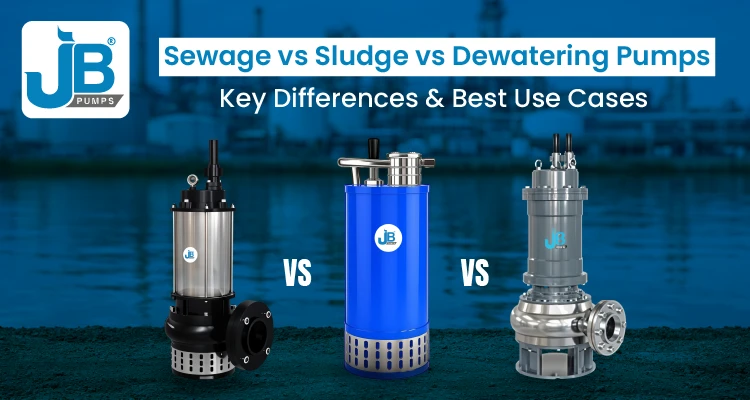
The core difference begins with what they’re designed to handle and where they’re used. Here’s a quick comparison:
| Feature | Sewage Pump | Sludge Pump | Dewatering Pump |
| Primary Use | Raw sewage & wastewater with solids | Thick, viscous sludge with high solid content | Clear to slightly dirty water removal |
| Solid Handling | Up to 50–80mm solids | High-density solids (30–60% concentration) | Small particles, minimal solids |
| Typical Industries | Municipal sewage, residential buildings, STPs | Mining, paper mills, wastewater treatment, cement plants | Construction sites, basements, excavations, tunnels |
| Pump Design | Vortex or channel impeller | Agitator-equipped, heavy-duty construction | Compact, high-head centrifugal design |
| Key Challenge | Clogging from debris and fibrous materials | Abrasion from dense, gritty materials | Continuous operation in harsh environments |
What Exactly Is a Sewage Pump and When Do You Need One?
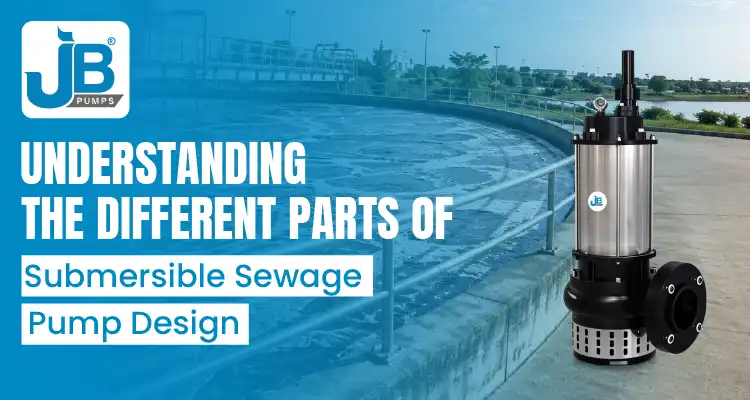
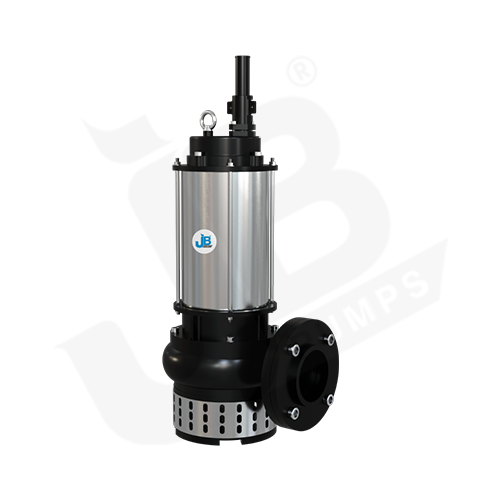
A sewage pump is specifically engineered to move raw sewage and wastewater containing human waste, toilet paper, and other organic solids from residential, commercial, or municipal sources.
Key Characteristics:
- Solids passage: Typically, 50mm to 80mm
- Impeller type: Vortex, semi-open, or channel impellers to prevent clogging
- Material construction: Corrosion-resistant cast iron or stainless steel
- Operation: Submersible or non-clog designs for continuous duty
Common Applications:
- Municipal sewage lift stations
- Residential septic systems and basement installations
- Commercial buildings and hotels
- Sewage treatment plants (STP) for raw influent transfer
- Hospital and institutional wastewater systems
Think of a sewage pump as the workhorse that handles “everything that goes down the drain.” It’s designed to keep moving despite toilet paper, sanitary products, and organic debris that would clog standard pumps.
Need a reliable sewage pumping solution?
Explore JB Pumps’ range of submersible sewage pumps designed for Indian municipal and industrial applications.
What Is a Sludge Pump and How Is It Different?
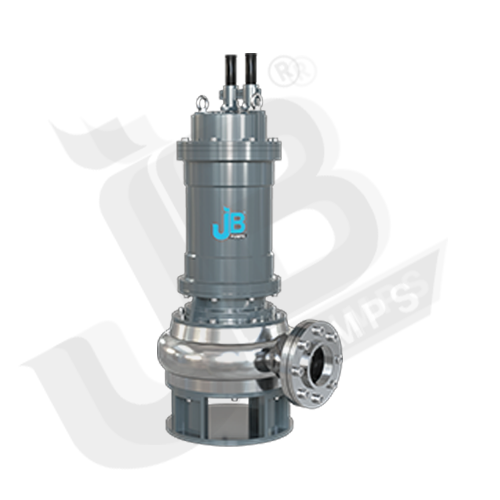
A sludge pump is built for one purpose: handling thick, viscous, high-density slurries with substantial solid content. We’re talking about materials like activated sludge, industrial slurries, mining tailings, and digested biosolids.
Key Characteristics:
- Solid concentration: Handles up to 30–60% solids by weight
- Construction: Extra-heavy-duty with wear-resistant materials
- Special features: Built-in vibrators to keep solids suspended
- Impeller design: Recessed, enclosed, or rubber-lined for abrasion resistance
Common Applications:
- Wastewater treatment plants (ETP/STP sludge transfer)
- Mining operations (slurry and tailings handling)
- Paper and pulp industry sludge management
- Cement plants and fly ash handling
- Chemical processing waste streams
- Biogas plant digestate handling
What is the main difference between sewage pumps? Sludge pumps deal with much thicker, more abrasive materials that would wear out a standard sewage pump in weeks.
JB Pumps’ submersible sludge pumps come with built-in agitators and hardened wear parts specifically for these demanding industrial applications.
What Is a Dewatering Pump and Where Is It Essential?
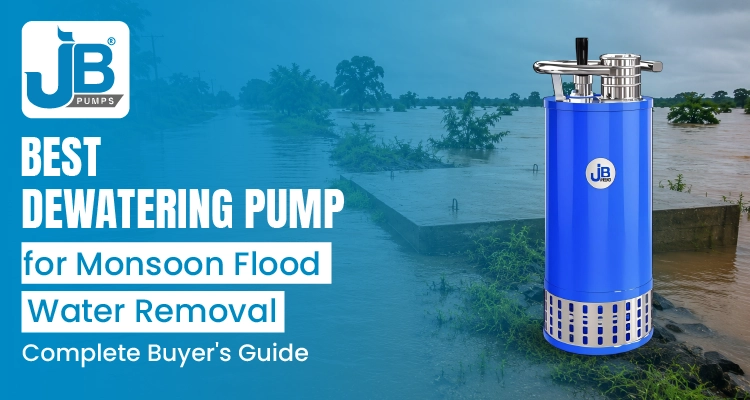
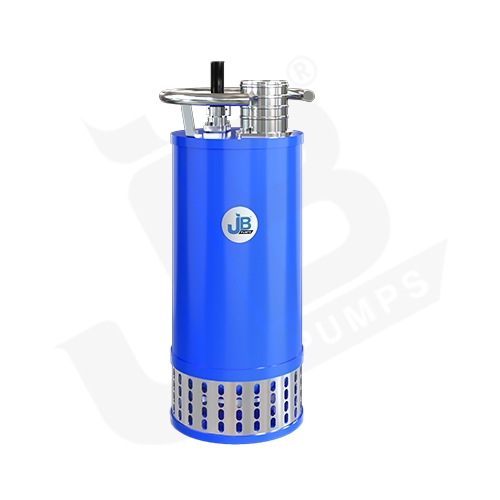
Dewatering pumps are designed to remove water from excavations, construction sites, mines, and flooded areas. Unlike sewage and sludge pumps, they primarily handle relatively clean water – though they can tolerate some sand, silt, and fine particles.
Key Characteristics:
- Head capabilities: High-head performance (can pump to significant heights)
- Solid handling: Limited to 5–15mm particles
- Design focus: Continuous operation, high efficiency, compact size
- Portability: Often lightweight and trailer-mounted for rental applications
Common Applications:
- Construction site excavation and foundation work
- Tunnel and underground mining dewatering
- Basement and underground parking flooding
- Agricultural field drainage
- Emergency flood response
- Marine and shipyard dry dock operations
Think of dewatering pumps as your emergency water removal specialist. They’re not built for heavy solids or thick materials – their strength is moving large volumes of water quickly and efficiently.
Emergency dewatering project? JB Pumps offers rental dewatering pump solutions with rapid deployment across India.
When Should You Use Each Type of Pump?
Use a Sewage Pump When:
✓ You’re handling domestic or municipal wastewater with human waste
✓ There are fibrous materials and soft solids in the flow
✓ You need reliable operation in residential or commercial buildings
✓ The application involves sewage lift stations or treatment plant influent
Use a Sludge Pump When:
✓ You’re dealing with high solid concentration (above 15–20%)
✓ The material is thick, viscous, and potentially abrasive
✓ You need to prevent settling during transfer
✓ Applications include mining slurries, industrial sludge, or biosolids
Use a Dewatering Pump When:
✓ The primary goal is removing relatively clean water
✓ You need high head pumping capability
✓ The application is temporary (construction, emergency flooding)
✓ Portability and continuous operation are priorities
How Do You Choose the Right Pump for Your Application?
Selecting between sewage, sludge, and dewatering pumps isn’t just about the pump type – it’s about matching specifications to your exact needs.
Step 1: Analyze Your Material
- What’s the solid content? Less than 5% = dewatering, 5–15% = sewage, above 15% = sludge
- What is the particle size? Larger solids need bigger passage sizes
- Is it abrasive? Mining and industrial applications need wear-resistant materials
Step 2: Calculate Your Requirements
- Flow rate (LPM or m³/hr): How much volume needs moving?
- Head (meters): How high or far must you pump?
- Duty cycle: Intermittent or continuous operation?
Step 3: Consider Environmental Factors
- Submersible or dry-pit installation?
- Explosion-proof requirements (chemical plants, refineries)
- Temperature extremes affecting material selection
- Corrosive environments requiring stainless steel or special coatings
Step 4: Don’t Forget Lifecycle Costs
The cheapest pump upfront often costs the most over time. Consider:
- Energy efficiency ratings
- Maintenance requirements and spare part availability
- Warranty and after-sales support
- Track record in similar applications
Unsure which pump fits your application? Contact JB Pumps technical team for a free consultation and pump selection analysis.
What Are the Most Common Mistakes When Selecting These Pumps?
Mistake #1: Using a Dewatering Pump for Sewage
Dewatering pumps can’t handle fibrous materials and will clog immediately in sewage applications. The repair costs and downtime aren’t worth the initial savings.
Mistake #2: Undersizing Solid Passage
If your sewage pump has a 40mm passage, but your system regularly sees 50mm solids, you’re guaranteeing frequent blockages. Always size up for the largest expected solid.
Mistake #3: Ignoring Abrasion in Sludge Applications
Standard cast iron pumps wear out rapidly in abrasive sludge. Invest in hardened materials or rubber-lined options from the start.
Mistake #4: Neglecting Total Head Calculations
Dewatering pumps must overcome both vertical lift AND friction losses in piping. Underestimating the total head means poor performance or complete failure.
Mistake #5: Forgetting About Maintenance Access
Submersible pumps need regular inspection and cleaning. If your installation makes extraction difficult, maintenance costs skyrocket.
Final Thoughts: Match the Pump to the Application
The difference between sewage, sludge, and dewatering pumps isn’t just technical jargon – it’s the foundation of reliable wastewater management. Use sewage pumps for domestic and municipal waste with organic solids. Deploy sludge pumps for high-density industrial slurries and mining applications. Choose dewatering pumps for construction sites and water removal projects.
Making the right choice means:
✅ Fewer breakdowns and lower maintenance costs
✅ Better energy efficiency and operational savings
✅ Extended pump lifespan and reduced downtime
✅ Compliance with environmental and safety regulations
JB Pumps has been a trusted partner for industrial and municipal pumping solutions across various sectors – from cement plants to sewage treatment facilities, mining operations to infrastructure projects.
Ready to specify the right pump for your project?
Contact JB Pumps today for expert guidance, technical specifications, and competitive quotations. Our engineering team is ready to help you solve your toughest pumping challenges.
Frequently Asked Questions (FAQs)
1. Can I use a sewage pump for dewatering applications?
Yes, but it’s not ideal. Sewage pumps can handle dewatering if solids are minimal, but dewatering pumps are more efficient for clean water and provide better head pressure. For construction sites with mostly clear water, choose a proper dewatering pump.
2. What’s the maximum solid size a sludge pump can handle?
Most industrial sludge pumps handle solids up to 50–75mm, but the key factor is total solid concentration, not just size. High-density slurries above 40% solids require specialized heavy-duty sludge pumps with agitators.
3. How often should I service submersible wastewater pumps?
For sewage pumps in continuous duty, inspect quarterly and perform major maintenance annually. Sludge pumps in abrasive applications may need more frequent checks (monthly inspections). Dewatering pumps used intermittently need servicing after every major project.
4. What causes sewage pump clogging and how do I prevent it?
Common culprits include rags, plastic bags, feminine hygiene products, and fibrous materials. Prevention includes installing inlet screens, educating users on proper disposal, selecting vortex impellers, and sizing pumps with adequate solid passage.
5. Are rental dewatering pumps cost-effective for short-term projects?
absolutely. For projects under 3–6 months, renting avoids capital expenditure, eliminates maintenance responsibilities, and provides flexibility. JB Pumps offers rental options for emergency dewatering and short-term construction needs.